Archive | Academia RSS feed for this archive

Post-Human Landscapes

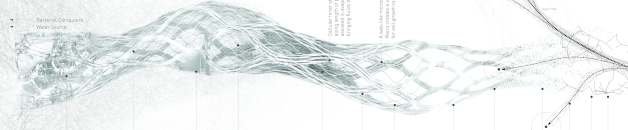
-The representations [above] are an early attempt to represent a post human landscape, or at least the introduction to one, where the synthesis of biology and technology are interwoven into a new landscape ecology. This is an arena where mental and physical connections and responses are exchanged between human and ecology. Atmospheres are augmented, manipulated […]

Continue Reading

09-11 studio portfolio

Continue Reading

huronSYNERGY revisited

-New visualizations for Fall 2009 Huron River Watershed Council Headquarters. The model was parametrically built using Grasshopper following circulation curves in the landscape.

Continue Reading

Thesis Update

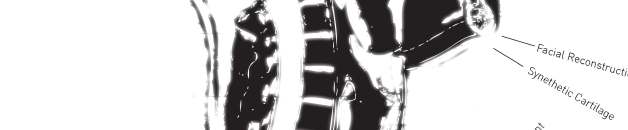
-In thinking through the development of the project I am attempting to set up a narrative that ties into future aspirations of the city [Chicago], post-human futures, and biotechnical mergers. The project is attempting to achieve an architecture which would lay forth one possible scenario culminating from the merger of biology and technology where body/building […]

Continue Reading

Scaffolding Proposal

Scaffolding: Site becomes a datascape as flows of information are processed within the existing context of proposed growth. Agent based simulations react to these flows of information, determining spatial organization and structural trajectories. These simulations become not acted out within a traditional computer and monitor, but projected into the atmosphere as the calculations are processed […]

Continue Reading

scaffold test v3

Continue Reading

SCAFFOLDING TEST V2

-Second phase of iterative testing for a potential scaffolding system.

Continue Reading

Scaffolding Test v1

-First phase of iterative testing for a potential scaffolding system.

Continue Reading

Biophilia + Technophilia: Initiate Narrative

1.28.2011: Biophilia + Technophilia: Narrative Proposal: I initially began this project with the intention of designing the scaffolding first; an autonomously printed scaffolding system by which electrical impulses may be sensed and responded to-a system where biotechnical matter adheres to and becomes a part of. I would now like to go back to the narrative. […]

Continue Reading

Fourth Natures

‘In Garden Perfections: The Practice of Garden Theory (2000), the landscape theorist John Dixon Hunt elucidates three categories of landscape first defined during the Renaissance: ‘first nature’ being wilderness, ‘second nature’ being the cultivated landscape, and ‘third nature’ being the garden, a combination of nature and culture. One might argue that over the course of […]

Continue Reading