Tag Archives: Research

spotlight: terreform

IN VITRO MEAT HABITAT Credits: Mitchell Joachim, Eric Tan, Oliver Medvedik, Maria Aiolova. This is an architectural proposal for the fabrication of 3D printed extruded pig cells to form real organic dwellings. It is intended to be a “victimless shelter”, because no sentient being was harmed in the laboratory growth of the skin. We used […]
Continue Reading

crit 39

How changes occur and the orders in which they emerge are placed by both time and events. In biological terms the phenomena was first explained by Charles Darwin and Alfred Russell Wallace who in 1858 jointly unveiled their theories On the Tendency of Species to form Varieties; and on the Perpetuation of Varieties and Species […]

Continue Reading

Spimes + Future of Objects

Bruce Sterling is a writer and visionary. He speaks about “Spimes and the future of artifacts” at the LIFT06 conference. Spime is a neologism for a currently-theoretical object that can be tracked through space and time throughout the lifetime of the object. The name “spime” for this concept was coined by author Bruce Sterling. Sterling […]

Continue Reading

jenny sabin: branching morphogenesis

PHILADELPHIA – Made from 75,000 interconnected cable zip-ties, “Branching Morphogenesis,” simulates the predicted network generated by human lung cells as they interact with an extracellular matrix in three-dimensional space and time. Designed and produced by the Sabin+Jones LabStudio at Penn, “Branching Morphogenesis” allows visitors to walk through a giant three-dimensional “datascape,” encapsulating the way in […]

Continue Reading

A Comparative Computer Simulation of Dendritic Morphology

Dendritic morphology underlies many aspects of nervous system structure and function. Dendrites, along with axons, define the connectivity of the brain [1],[2], and play a large role in information processing at the single cell level [3],[4]. Many studies have highlighted the importance of dendritic branching pattern in neuronal behavior. Mainen and Sejnowski [5] have shown […]

Continue Reading

nikos salingaros | on fractal scaling

For the past few years, I have been applying the analytic thinking of a scientist to find basic laws for architecture and urbanism, following the lead of my friend, the brilliant architectural theorist Christopher Alexander. The results derived so far show that a building, or city, is subject to the same organizational laws as a […]

Continue Reading

unit 20: convoluted flesh

Convoluted Flesh The convoluted (i.e. overlapped, intertwined and blurred) nature of contemporary architectural design, as we understand it, goes beyond the functions of opulence and intricacy, of technique and simulation, of module and optimisation. It invokes something ranking above notions of beauty, style, and elegance – it evokes the sublime, the blissful and the mysterious. […]

Continue Reading

sea-mouse nanowires

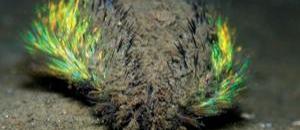
THE shimmering sea mouse, Aphrodita aculeata, may hold a key to creating nanoscale electronics, making it possible to produce nanowires 100 times longer than existing methods allow – and for a fraction of the price. The sea mouse is a marine worm the length of your thumb and is native to the North Atlantic and […]

Continue Reading

Fractals and the art of roughness

At TED2010, mathematics legend Benoit Mandelbrot develops a theme he first discussed at TED in 1984 — the extreme complexity of roughness, and the way that fractal math can find order within patterns that seem unknowably complicated. Benoit Mandelbrot – Fractal Art – Ted Link Ron Eglash – African Fractals – Ted Link

Continue Reading

Archimorph Book i

-In early 2011 Archimorph will be publishing their first book, self-titled; Archimorph Book I: Architecture, Biomimetics, Technology. More information will be available closer to the release date.-JB

Continue Reading